Buying your first original artwork, step by step
A calm, step-by-step guide to buying a first original work: setting a budget, where to look, what to ask, and the paperwork, payment and delivery that follow.

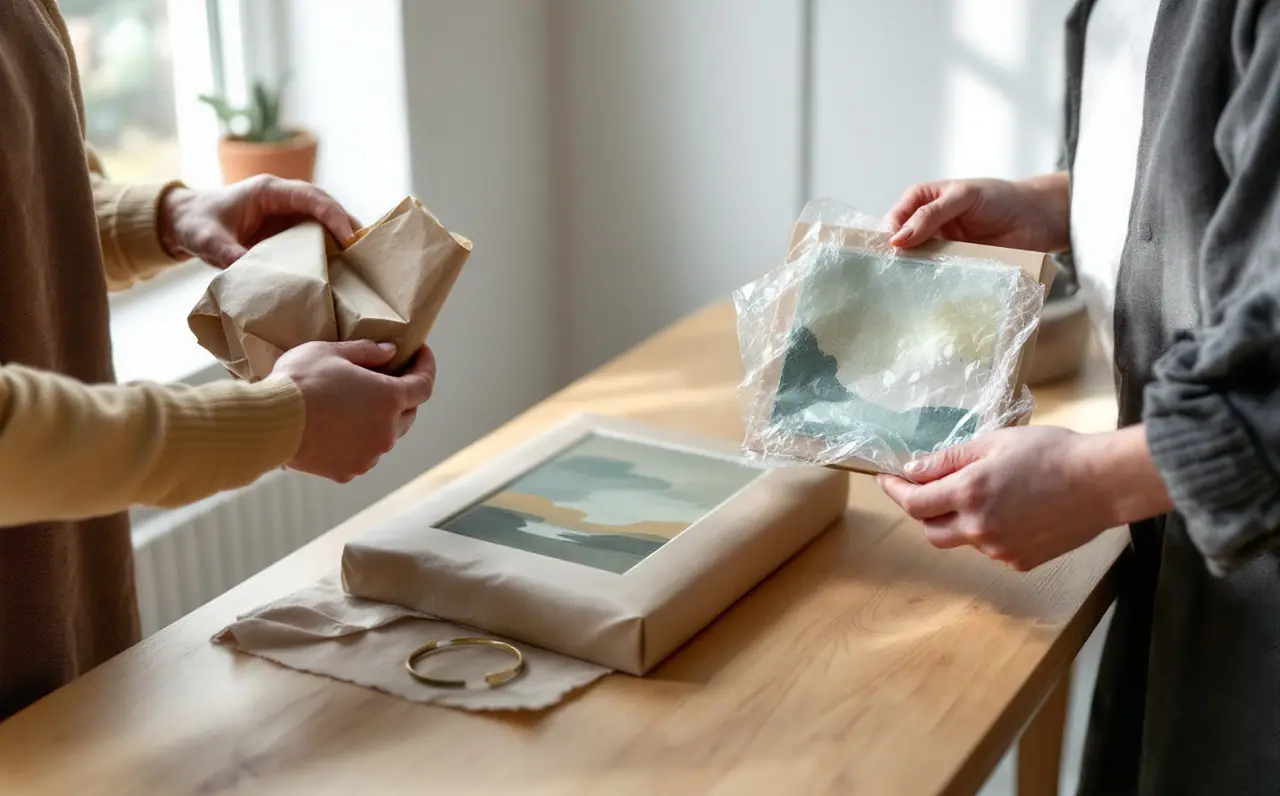
The first original artwork you buy is rarely the most expensive thing you will own, but it can feel like the biggest decision. There is no box to tick, no star rating, no return policy you fully trust, and a nagging sense that everyone else in the room knows something you don't. They mostly don't. Buying art is a learnable process, and it gets easier the second time.
My own hallway in Brisbane is mainly prints, with a couple of small paintings that took me far longer to decide on than they should have. What follows is the sequence I wish someone had handed me. It assumes you are buying because you love a work and want to live with it, which is the only good reason to buy art.
Step 1: Decide what you are comfortable spending
Start with the number before you start with the art, because once you have fallen for a painting your sense of what is affordable will stretch. Ask yourself what amount you could spend without it bothering you in three months. That is your budget. It might be a few hundred dollars or a few thousand. Both are real budgets, and both will buy genuine original work.
A useful way to think about it is to split the total rather than spend all of it on the work itself. A sample split for a framed work on paper might look like this:
- about 70 per cent on the artwork
- about 20 per cent on framing, if it comes unframed
- about 10 per cent held back for delivery, hanging hardware or a surprise
If you are buying a stretched canvas that needs no frame, the framing share can go back into the work. Either way, knowing the split in advance stops you discovering later that the frame costs almost as much as the drawing.
It also helps to know how prices usually behave. A small work costs less than a large one by the same artist. Works on paper usually cost less than paintings on canvas. Prints and photographs in editions are often the most affordable way into an artist's work. Newer artists generally ask less than artists with long exhibition histories.
Step 2: Look a lot before you buy anything
Spend a few weeks just looking. Visit public galleries to train your eye, then commercial ones to see what is actually for sale. If walking into a dealer gallery feels daunting, read visiting a commercial gallery for the first time first; it explains price lists, red dots and stockrooms, and why nobody expects you to buy on your first visit.
Keep a note on your phone of works you keep thinking about after you leave. Patterns appear quickly. You might find you always stop in front of small, quiet landscapes, or loud figurative paintings, or anything with a lot of blue.
Pay attention to size as well as subject. Measure the walls you actually have before you go out, and carry the numbers with you. A painting that looks modest in a gallery with four-metre ceilings can swallow a small living room, and a tiny drawing that looked lost on a gallery wall can be perfect beside a bookcase. Knowing that your one free wall is 140 centimetres wide will save you from falling for something that will never fit.
Step 3: Know where to look
There are more places to buy original work than most people realise.
Art school graduate shows
Most art schools hold end-of-year graduate exhibitions, usually in late spring. Works are often for sale at modest prices, the artists are frequently in the room, and you get to see a whole generation of painters at once. It is one of the most enjoyable ways to buy a first work.
Art prizes
Many regional and local art prizes hang an exhibition of finalists, and in a lot of them the works are for sale. The range of styles in one room is a useful education in itself.
Commercial galleries
The obvious place, and for good reason. A gallery that represents an artist can tell you about their history, show you more work from the stockroom and stand behind what it sells. Sydney has a dense cluster of dealer galleries; our guide to visiting commercial gallery exhibitions in Sydney explains how the calendar works if you want to plan a few visits. Before you go, it can help to read about a few artists whose work you have seen; our artist notes, such as the note on Rhys Lee, are a good way to get to know a painter's preoccupations before you stand in front of the work.
Open studios
Some artists open their studios on set weekends, and many studio complexes hold open days. You see where and how the work is made, which can make a purchase feel much more personal.
Online
Artists' own websites and galleries' online catalogues make it possible to buy from anywhere. Ask for extra photographs, including the edges and back, request the exact dimensions, and check the delivery and return terms before you pay.
Step 4: Ask the right questions
Once a particular work has your attention, ask about it. Reasonable questions include:
- Is the price inclusive of the frame, if it has one?
- Is it unique, or part of an edition? If an edition, what number and how large is the edition?
- What is it made with, and on what? (Oil on linen, acrylic on board, pigment print on cotton rag paper.)
- Is there anything I should know about its condition or care?
- Is delivery included, and is it insured while in transit?
If you are buying Aboriginal or Torres Strait Islander art, ask how the artist is paid and who the work came from. The Indigenous Art Code sets out fair-dealing standards for dealers and is a useful starting point for what to ask.
Step 5: Give yourself a day
Unless the work is about to go to someone else, you can almost always ask the gallery to hold it overnight or for a couple of days while you think. Go home, measure the wall, and see whether you still want it in the morning. If you do, that is a good sign. If the thought of someone else buying it makes your stomach drop, that is an even better one.
Step 6: Understand the paperwork
When you buy, you should get a proper invoice or receipt. A good one lists the artist's name, the title, the date of the work, the medium, the dimensions, the price, and the edition number if relevant. Keep it somewhere safe with a photograph of the work. It is useful for insurance and, one day, for anyone who inherits it.
Many galleries and artists also provide a certificate of authenticity, particularly for prints and photographs. For editioned work it should state the edition size, the number of your impression, the printing method and paper, and ideally who printed it. A certificate is a helpful record but it is not magic. The real assurance is buying from the artist or from a reputable seller who can tell you where the work came from.
Step 7: Ask about payment options
Paying in full on the day is not the only way. Some galleries offer lay-by, where you pay in instalments over a few months and collect the work once it is paid off. Others work with interest-free payment arrangements. Artists selling directly may be happy with a deposit and the balance later. It costs nothing to ask what is possible, and asking does not mark you out as a less serious buyer.
Step 8: Plan the delivery and the first week
Small works can often be carried home on the day. Larger ones usually need delivery, which the gallery may arrange through an art courier. When it arrives, unpack it somewhere clear, check it against the description and photograph it straight away. If anything is damaged, tell the seller at once.
Then live with it for a while before deciding exactly where it goes. Lean it against a wall in a couple of rooms. Look at it in morning and evening light. Avoid direct sun, bathrooms and the wall above a working fireplace. When you do hang it, use proper hardware rated for its weight.
A worked example
Say you have settled on a total of one thousand five hundred dollars. You spend a couple of months looking, and fall for an unframed charcoal drawing at a graduate show and a small oil at a commercial gallery. The drawing is well inside your budget but will need framing, so under your split about a thousand goes on the work, three hundred on a frame and the rest on delivery and hooks. The oil is already on a stretched canvas and needs no frame, so most of the total can go on the work itself.
You ask both sellers the questions in Step 4, ask the gallery to hold the oil for two days, and go home to measure. In the end you choose the drawing because it fits the narrow wall by your front door and the oil does not. The invoice lists the title, date, medium and size; you photograph the work and the paperwork together and file them.
That is the whole process. It is not glamorous, but it means that when you look at the wall every morning you will know exactly what is on it and why you chose it.

Jasper Quayle
Jasper Quayle writes for people buying their first original work: budgets, editions, certificates and the questions worth asking before paying. He lives in Brisbane, where his hallway is mostly prints and picture hooks.
In the same room
Collecting photographs as art without getting lost in the jargon
Editions and sizes, silver gelatin, chromogenic and pigment prints, signatures and labels, light and framing: a plain guide to living with fine art photography.
Prints and editions explained, from etchings to inkjet
What makes a print original, how etchings, lithographs and screenprints differ, what 12/30 and A/P mean, and what a certificate for a print should say.