Visiting a commercial gallery for the first time
Commercial galleries are free, quiet and glad to see you. How price lists, red dots and stockrooms work, and how to walk in without feeling like an intruder.

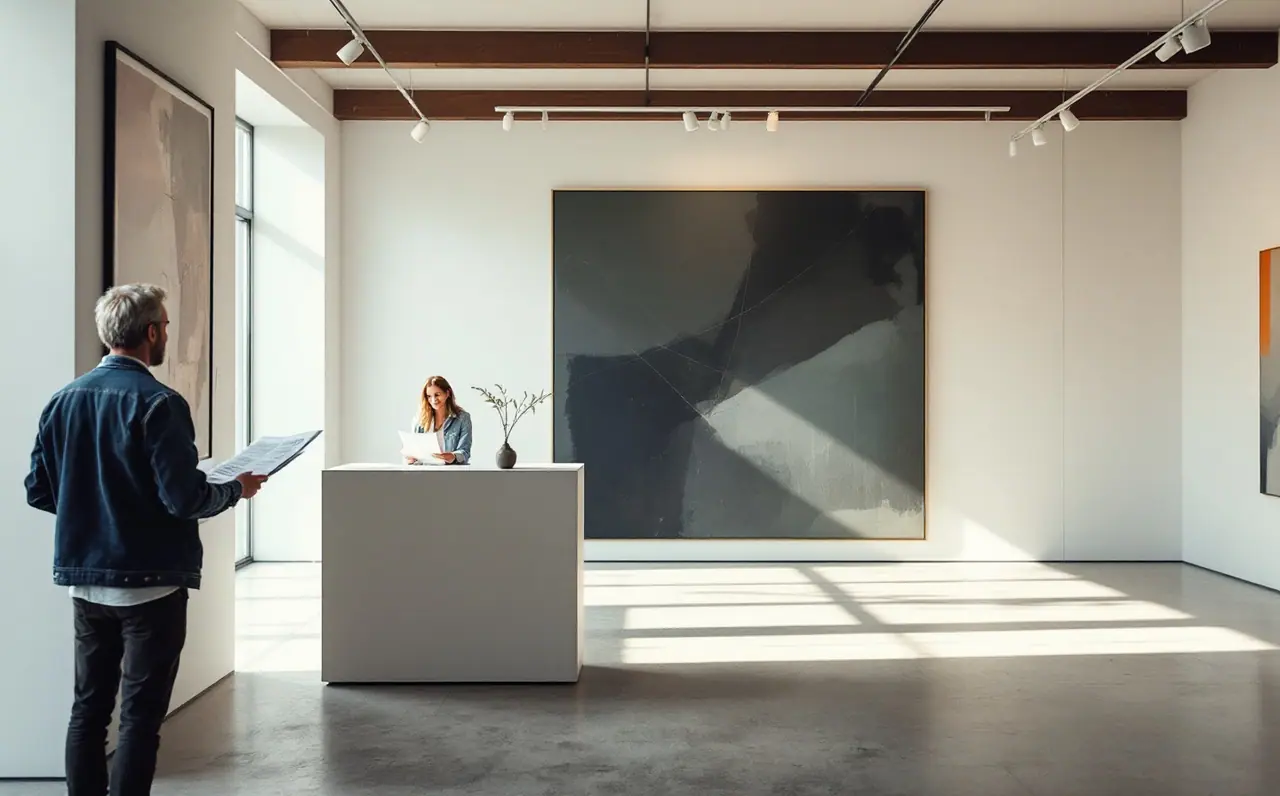
A lot of people who happily spend a Sunday at a state gallery have never set foot in a commercial one. The glass door, the hushed white room, the person at the desk who looks up when you come in: it can all feel like a shop you have not been invited into. I understand the hesitation. For years I collected exhibition invitations from cafe noticeboards and never used them. But commercial galleries are some of the best free shows in any Australian city, and the people who run them generally want you there, whether or not you are buying anything today.
This piece explains how they work, what the paperwork means and how to behave, so the next time you pass one you can push the door open.
What a commercial gallery actually is
A commercial gallery (also called a dealer gallery) is a private business that shows and sells the work of the artists it represents. That is the difference from a public gallery like the Art Gallery of New South Wales or a regional gallery, which holds a permanent collection on behalf of the public and does not sell anything except postcards and catalogues.
The usual arrangement is that the gallery takes artworks on consignment, hangs exhibitions, handles the selling and pays the artist once a work is sold, keeping a commission. In return the gallery does a great deal of work you never see: storing and insuring work, photographing it, writing catalogue text, keeping in touch with collectors, sending work to art fairs and helping artists build a career over decades.
There are also artist-run initiatives, which are usually not-for-profit spaces run by artists themselves, and hire spaces, which rent their walls to whoever pays. Both are worth visiting, but the etiquette below is mainly about dealer galleries.
How shows are scheduled
Most commercial galleries run a program of solo and group exhibitions, each hanging for about three to four weeks. A new show usually opens with an evening event, often midweek, early evening, where the artist is present and there may be a glass of wine. Openings are generally open to the public. You do not need an invitation in hand, although joining the gallery's mailing list is the easiest way to hear about them.
Galleries in Sydney and Melbourne tend to keep short weekday hours and are often closed on Mondays and sometimes Tuesdays, so check the gallery's own website before making a trip. Many also close over summer, roughly from Christmas to late January, and reopen with a new program. Our guide to visiting commercial gallery exhibitions in Sydney covers the rhythm of the calendar and how to plan a round of several galleries in an afternoon.
Walking in
You are allowed to just walk in. You do not need to buy, to know anything, or to explain yourself. Someone at the desk will probably say hello. Saying hello back is all that is required. If they ask whether you have seen the artist's work before, an honest "no, I was just passing" is a perfectly good answer.
Then look. Take your time. A small gallery might have ten or fifteen works on the walls, which makes it a good place to practise looking at one painting properly; the method in how to look at a painting slowly works just as well here as in a museum, and you will usually have the room to yourself.
The price list and the room sheet
Near the desk there is usually a printed sheet, a folder or a QR code that lists the works in the show. This is the room sheet or price list. It typically gives a number for each work matching a small number on the wall, then the title, date, medium, dimensions and price. Some galleries print prices openly; some write "price on application" or leave them off, in which case you can simply ask.
Reading a price list is not a commitment to anything. Plenty of visitors take one to understand the show, or to see how an artist's small works compare with their large ones. The sheet may also include a short essay or artist statement, which is often worth reading after you have had a first look.
Red dots and what they mean
A small red sticker next to a work means it has been sold. Sometimes you will see half a dot, or a dot of a different colour, which usually means a work is on hold, reserved for someone who is deciding. A row of red dots on opening night means the show sold well. It also explains why some works you see on the gallery's website might not be available by the time you visit.
Some galleries also mark editions, such as prints or photographs, with several small dots to show how many of the edition have sold. Photography is often sold this way, in small numbered editions, so a single image in a photography show can collect a little row of dots. If you are drawn to camera-based work, our note on the photographer Tamara Dean is a good introduction to one Australian artist whose pictures you will meet on gallery walls. If in doubt about any marking, ask.
The stockroom
Most commercial galleries have a stockroom: a storage area full of works by their artists that are not in the current show. This is one of the best-kept secrets of gallery-going. If you like an artist's work but nothing on the walls is quite right, or you are curious about earlier pieces, you can ask whether there is more in the stockroom. Staff are usually glad to bring things out, especially on a quiet weekday. It is a normal request, not a presumptuous one.
Talking to the people at the desk
Gallery staff spend their days surrounded by work they care about, and most of them like talking about it. Good questions include:
- How long has the artist been working on this series?
- Is there anything else by them in the stockroom?
- How was this made? (Especially useful for prints, photographs and mixed media.)
- Is there a catalogue or a recording of an artist talk?
You do not need to pretend to be a buyer to ask any of these. If you are considering buying, it is fine to say so, and to say you need time to think.
Etiquette, briefly
- Do not touch the work, including the canvas edges and frames.
- Ask before taking photos. Most galleries are relaxed about it for personal use, but some artists prefer not.
- Keep bags and umbrellas away from the walls, especially in small rooms.
- Openings can be crowded; give people space to stand back from the work.
- If you are with children, keep them close. Most galleries welcome them, and plenty of artists love it when they visit.
A worked example: an afternoon round
Here is how a first visit might go. You choose three galleries within walking distance of each other, check their websites on Saturday morning and find that two have new shows and one is between exhibitions but open for the stockroom. You allow about thirty minutes for each.
At the first, you take the price list, walk the room once quickly, then pick one painting to stand with for five minutes. You ask the person at the desk how the artist builds up such thick surfaces, and learn that the paint is laid on with a palette knife over many weeks. At the second, a group show, you note three artists you have never heard of and photograph the room sheet (with permission) to look them up later. At the third, you ask to see works on paper in the stockroom and spend twenty minutes leafing through drawings in a plan chest. You leave having spent nothing, joined two mailing lists and learned far more than you expected.
That is a successful afternoon. Nobody minded.
Questions worth asking
Is it rude to go in if I have no intention of buying?
No. Commercial galleries rely on people seeing the work, talking about it and coming back. Many collectors started as visitors who browsed for years before buying anything. Staff know this.
Do I have to go to the opening?
Not at all. Openings are fun, but they can be crowded and you may not see the work well. Many regular gallery-goers prefer a quiet weekday visit later in the show, when there is time to look and ask questions.
Can I ask to see the artist's prices for earlier work?
You can ask what else is available and what it costs. Galleries will not discuss what other people paid, but they will happily tell you about works they have on hand, including smaller pieces and works on paper.
What if I see a work I really love?
Ask whether it is available and what the price is, then take your time. Some galleries will place a short hold on a work while you think. If you would like to see how it might look at home, ask whether they can send an image with dimensions so you can measure your wall.

Mei-Ling Stroud
Mei-Ling Stroud covers gallery-going and photography: openings, prizes, room sheets and the way a show is hung. She lives in Sydney, shoots film on weekends and keeps a shoebox of exhibition invitations going back years.
In the same room
Regional galleries worth the drive
Why Australia's regional public galleries reward a road trip, seven well-established ones to plan around, and how to fit a gallery into a weekend away.
Visiting the Archibald Prize and its room full of faces
Where the Archibald came from, what its rules ask of a portrait, how the Wynne, Sulman, Packing Room and People's Choice fit in, and how to look at the walls.