How to bring a painting home from a trip without harming it
What to ask about luggage before a mountain transfer, how to wrap a small painting for the road, and how to let it settle once you are home.

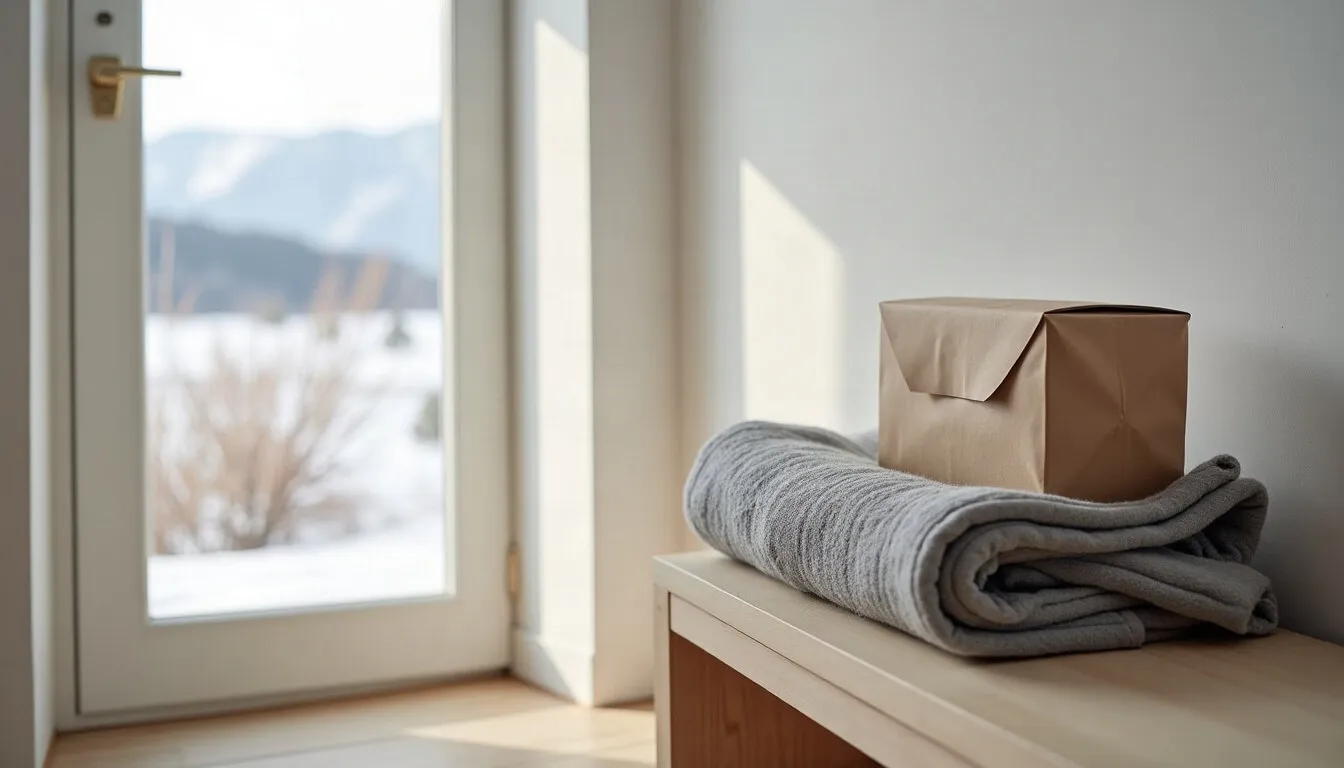
There is a particular kind of small painting people bring home from the mountains. It is usually a landscape, often no bigger than a book, bought on the last afternoon of a trip from someone who painted the ridge you could see from the window. It travels home wrapped in a jumper on someone's lap, and it is the one thing from the holiday that ends up on the wall.
Getting it home in one piece is mostly about planning. What should you ask before booking a Denver to Breckenridge bus or any other mountain transfer if you think you might bring a picture back? This piece walks through the questions, the wrapping and the first few days at home, in the order they come up.
Think about the picture before you think about the trip
The best time to plan for a painting is before you have one. Most people who come home with art did not set out to buy any, and that is part of the pleasure. But it helps to know, before you leave, how you would carry something flat and fragile if the moment came.
Start with size. A small work on paper or a little canvas board will sit happily in a day pack or on your knees. A stretched canvas the width of your shoulders is a different matter, and a framed work behind glass is heavier and more fragile again. If you are travelling by coach or shuttle with a group, the question becomes where it will ride: with you in the seat, or underneath in the luggage bay.
Then think about the weather. A mountain town in winter is cold and dry, with snow on the ground and bright, low sun off it. Coming down into the city, the air changes, and the house you return to may be heated and drier still. Paper and canvas both respond to those swings. Not dramatically, and not in a way that should stop anyone buying a picture, but enough that a little care makes a difference.
Questions worth putting to the transport company
Group transport is usually arranged around people and luggage, not around paintings, so it is worth asking a few plain things when you book. A good operator will be happy to answer.
- Can passengers keep a small, flat parcel with them in the seat, or does everything bulky go underneath?
- If it goes underneath, is the luggage bay separate from where skis and boots are stacked?
- Is there room to lay something flat, or will bags be piled on top of each other?
- If you are travelling as a group with a lot of gear, can one person take responsibility for a fragile item and load it last?
The answers tell you how to wrap. A painting that rides on your lap needs very little. One that goes in the hold with ski bags needs a rigid layer around it and a clear marking on the outside telling people which way is up, written on the wrapping by you.
Wrapping a painting for the road
Protect the corners and the face, and keep it upright. That is most of what matters.
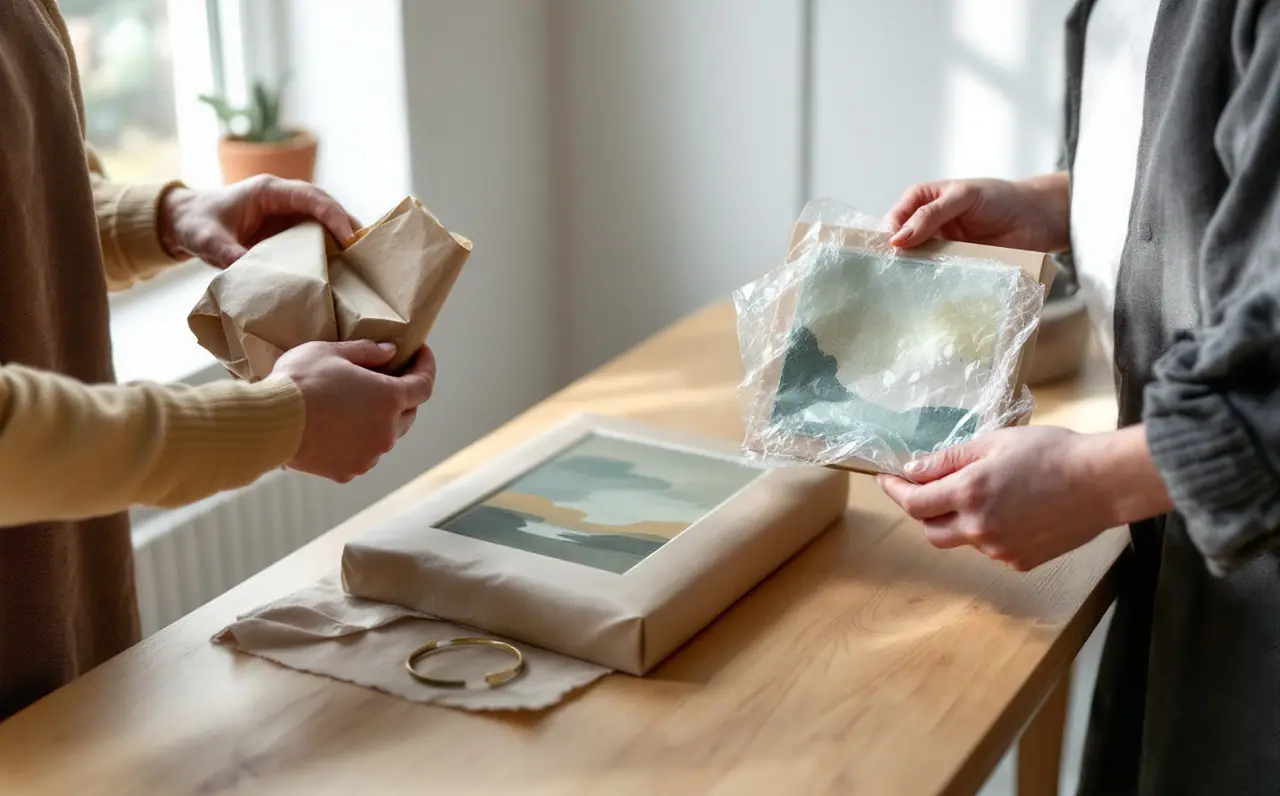
For a work on paper, unframed: slip it between two pieces of stiff card a little larger than the sheet, with a clean sheet of plain paper against the image. Tape the card edges together, not the artwork. Carry it flat in a bag where nothing heavy will sit on it.
For a small canvas: lay a sheet of clean paper over the painted face, then wrap the whole thing in a soft layer, a towel or a jumper does well, and then something firmer over that. Cardboard corners help. Never let anything with a point or an edge rest against the canvas itself, because a dent in a canvas can stay.
For a framed work behind glass: cross the glass with a couple of strips of low-tack tape so that if it breaks, the shards hold together rather than cutting the picture. Then wrap it as for a canvas, with extra padding at the corners, which take every knock.
| Option | What it does | Suits | Watch for |
|---|---|---|---|
| Card sandwich in a bag | Keeps paper flat and clean | Small drawings and watercolours | Anything heavy stacked on top |
| Soft wrap plus cardboard | Cushions the face and corners | Small canvases and boards | Tape touching the paint surface |
| Padded box | Rigid all round | Framed works going in the hold | Packing too tight against the glass |
If the painting is fresh, ask the person who sold it how long it has been dry. Oil paint can feel dry to the touch and still be soft underneath, and wrapping can leave a texture in it. Use loose paper and no plastic against the surface.
A worked example: a small canvas from a winter trip
Picture a family of four on a ski week in the mountains. On the last day, one of them buys a small oil on canvas board of the ridge behind the town. It is unframed, roughly the size of a dinner plate, and dry to the touch.
They are going back down to the city on a charter coach with their skis and two large bags each.
The night before, they wrap it. A sheet of plain paper goes over the face. Then a folded towel. Then the flattened lid of a shoebox on each side, taped together around the edges with nothing touching the painting.
At the coach, they keep it with them. It travels in a tote bag on a lap, upright, away from the window so it does not sit in hard sun for the whole ride. Nobody puts a drink near it.
At home, it does not come out of the wrapping straight away. The house is warm and the car park was freezing, so they leave the parcel in a cool inside room for an afternoon to settle. Then they unwrap it, look it over in daylight for marks or dents, and stand it on a shelf for a week while they decide where it should go.
Where it goes is the interesting bit. A painting of a mountain looks best facing the light it was painted in, which is to say lit from the side, not glaring from straight ahead. They choose a wall that catches soft afternoon light from a window at an angle, away from the heater, and hang it at eye height where the horizon in the picture lines up roughly with the eye of someone standing in the room.
The first few weeks at home
New art takes a little settling in. A few things are worth doing in the first weeks.
Keep the painting away from heaters, fireplaces and air-conditioning vents. A ski trip usually happens in the coldest part of the year, when the heating is on, and a picture over a radiator dries out quickly.
Keep the receipt, a note of where and when you bought it, and a photo of the front and back together in one place. If you ever want to know more about it, or need to describe it for your home insurance, you will be glad of them.
And give it a proper frame if it needs one, when you are ready. A good framer can tell you whether a small canvas board wants a simple timber frame or nothing at all.
Step back
This week, look at whatever small picture you have brought home from a trip and check where it hangs. If it sits over a heater or in a hard band of sun, move it somewhere quieter, where the light comes in at an angle and the air stays steady.
Wall label
- Subject: bringing a small painting home from a mountain trip
- Medium: works on paper, canvas boards, card, towels and tape
- Hang: a side-lit wall at eye height, away from heaters
- Note: ask how luggage travels before you buy, keep the painting upright and with you, and let it settle before unwrapping.

Lachlan Pryor
Lachlan Pryor writes about Australian landscape painting and the painters who came of age in the 1950s and 1960s. He grew up in the Hunter Valley and lives in Sydney's inner west, a short train ride from the state gallery he visits most weekends.
In the same room
Collecting photographs as art without getting lost in the jargon
Editions and sizes, silver gelatin, chromogenic and pigment prints, signatures and labels, light and framing: a plain guide to living with fine art photography.
Prints and editions explained, from etchings to inkjet
What makes a print original, how etchings, lithographs and screenprints differ, what 12/30 and A/P mean, and what a certificate for a print should say.
Buying your first original artwork, step by step
A calm, step-by-step guide to buying a first original work: setting a budget, where to look, what to ask, and the paperwork, payment and delivery that follow.