What a new furnace does to the art on your walls
How heating vents and dry winter air affect prints and canvases, and how to protect your pictures before, during and after a furnace replacement.

The print had hung in the hallway for three winters before I really looked at the mat. Along the bottom edge, right above the floor vent, the white had turned faintly cream and the paper had a soft ripple in it, like a page left near a kettle.
Heating changes the air a picture lives in, and new heating changes it again. If you're researching furnace installation Castle Rock CO, start with the house you already have: where the warm air comes out, which walls it brushes past, and what is hanging there. This piece walks through what to look at before, during and after the work, so the pictures come out the other side looking the way they went in.
Look at the walls with the heating running
Exhibition hangers walk a room before a single hook goes in. They look for sightlines, for where the light falls and for anything that will fight the work. Do the same at home, on a cold morning, with the heating on.
Stand in each room and find the outlets. Supply vents push warm air into the room. The return, usually a larger grille, pulls air back towards the system. Both move a surprising amount of air across the nearest wall.
Hold a strip of tissue near each one and watch which way it lifts. That draught is the path warm, dry air takes up the wall, and anything framed in that path gets a steady breath of it all winter.
Then look at the pictures sitting in those paths. I check three things:
- the mat or paper, for cream or brown edges and a gentle wave
- the canvas, for any slackness, where the fabric has lost its drum-tight feel and sags a little in the corners
- the frame, for joints that have opened at the corners or glazing that has shifted in the rebate
Glazing, if you're new to the word, is just the glass or acrylic sheet in front of the work. When the frame dries and shrinks, the glazing can rattle or sit unevenly, and the reflection on it goes wobbly. A photographer notices that before anything else.
What warm, dry air does to canvas and paper
Castle Rock sits on high, dry ground with cold, snowy winters and a lot of sun. Indoors, once the heating runs for weeks on end, the air in the house gets drier still. Art feels that before you do.
Paper reacts first. It takes up and gives off moisture with the air around it, so a work on paper near a vent swells and shrinks unevenly. The result is cockling, the soft waves you see across a watercolour or print that has been through a few dry seasons. Hinges, the small paper tabs that hold a work to its backing, can dry out and let go.
Canvas reacts more slowly. The fabric loosens and tightens with the air, and a painting hung over a heat source can go slack in winter and tight again in spring. Over many seasons that movement can stress the paint layer.
Timber frames and stretchers move too. A stretcher is the wooden frame a canvas is pulled over. Dry heat can open its corners just as it opens the mitred corners of a picture frame.
None of this is a reason to panic. The kinder room is simply a steady one. A heating system that is well looked after and keeps the house at an even, comfortable level is far easier on art than one that blasts on hard and then sits idle. That evenness is worth asking about when you talk to whoever quotes on the new system.
Before the installers arrive
A furnace replacement is work for trained professionals, and they need clear paths through your house. The old unit comes out, the new one goes in, and people carry equipment between the door and wherever the system lives, often a basement, garage or utility cupboard.
Ask a few questions when the job is booked:
- Which way will the crew come in, and which rooms and halls will they carry things through?
- Will any vents, registers or grilles be moved, added or closed off?
- Will there be dust or debris in the living areas, or will the work stay mostly in the plant room?
Those answers tell you which walls matter. Take down every picture along the carrying path, not just the ones closest to the furnace. Long pieces of equipment and ductwork turn corners badly, and a frame on a narrow hallway wall is the first thing an elbow or a box finds.
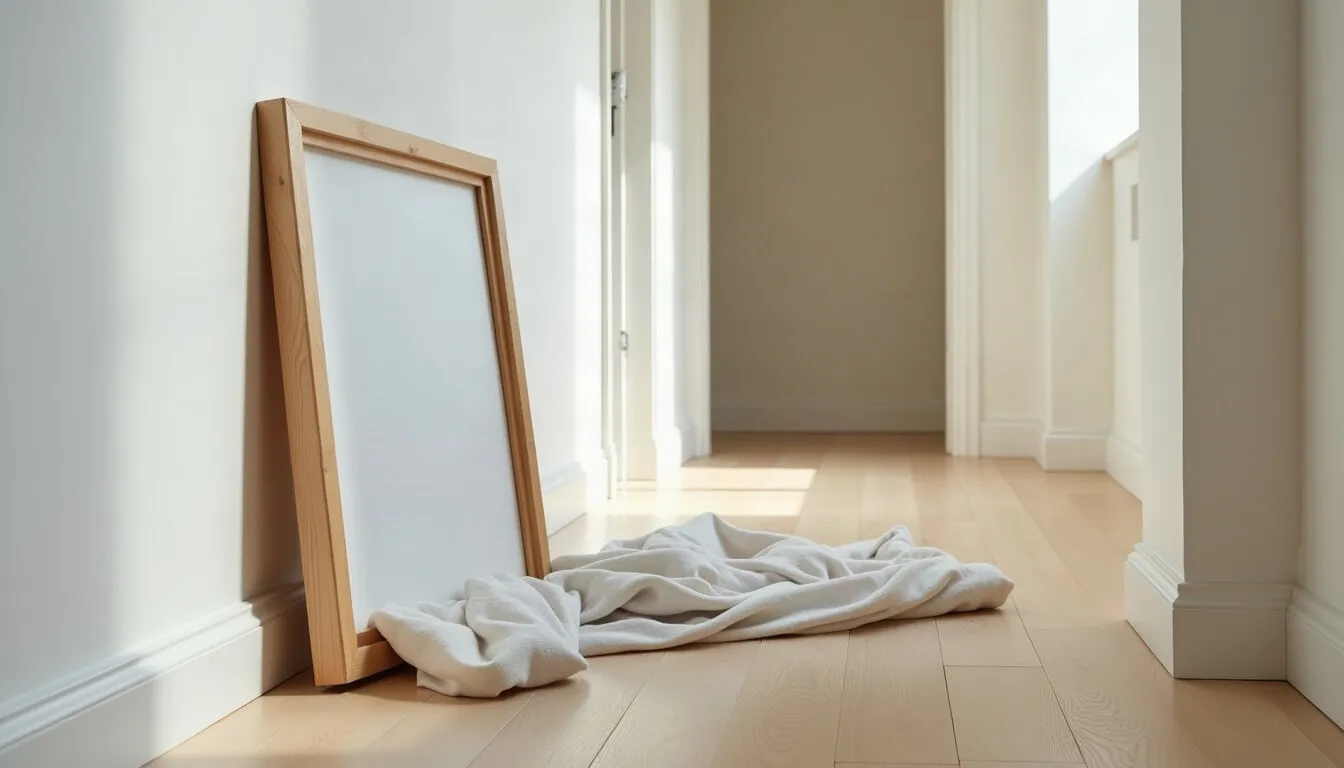
Lift each work off its hook with two hands, holding the frame at the sides rather than by the wire. Stand them upright, never flat, in a room the crew won't use. Lean them face to face and back to back, with a folded blanket between the floor and the bottom edge, and against an inside wall rather than an outside one.
Before you take anything down, photograph the wall. One wide shot, then a close shot of each hook. It saves you guessing later, and it gives you a record of how things looked before the job.
A worked example: the hallway above the return
Picture a narrow hall in a two-storey house. Halfway along, low on the wall, sits a big return grille. Above it hang three small works on paper in a row, framed alike, spaced evenly at eye height. It looks tidy. It is also the most exposed spot in the house.
All winter the return pulls air along that hall and past the frames. The mats on the middle print are already a shade darker at the bottom edge than at the top.
Before the new system goes in, the owner asks the installer whether the return will stay where it is. Say it will. She takes the three prints down, photographs the wall and stores them in the spare room.
After the job, she doesn't rehang straight away. She lives with the new system for a week or two, runs the tissue test again, and finds the draught is still there along the lower wall.
So she moves the three works to the opposite wall of the hall, which has no vent, and fills the old spot with something sturdy: a small mirror in a plain frame, which won't mind the air. The row of three keeps its spacing and its sightline. It just faces the other way.
That's the whole method. Look, ask, move the vulnerable things, put something tougher in the exposed place.
Rehanging after the new system is in
Give the house a little time first. A new system may run differently from the old one, and the rooms can feel different for a while as you get used to its settings. Rehanging on day one means hanging blind.
When you do rehang, work from your photographs. Check that each hook still sits firmly in the wall, since a lot of foot traffic and the odd bump can loosen one.
A few habits from the way exhibitions are hung help at home:
- Keep works on paper well away from any vent, return or register, above it or beside it.
- Save the walls nearest the heating for the tough things: mirrors, sturdy objects, works behind glazing in solid frames.
- Hang the most fragile pieces on inside walls, where the air is steadiest.
- Leave a little air behind each frame. Small felt or cork bumpers on the bottom corners hold it off the wall.
Then look at the light. Winter sun in a high, clear place is bright and low, and it can throw glare straight across glass. If the move put a glazed work opposite a south-facing window, you may need to shift it a little to one side to lose the reflection.
Questions worth asking
Should I take everything down for a furnace replacement?
Not everything. Take down what is on the carrying path, what is near the plant room and anything hanging close to a vent that may be moved. Works in rooms the crew never enters can stay.
Is it safe to hang a painting above a heating register?
It's best avoided. A register sends a column of warm air up the wall, and anything above it sits in that column for months. A plain mirror or a solid object is a better neighbour for a vent.
How do I know if a picture has already been affected?
Look for colour change at the edges of mats, waves in paper, a canvas that feels loose when you gently tap the back, and frame corners that have opened. If a valued work shows any of these, a picture framer or conservator can look at it properly.
Step back
This week, turn the heating on, walk the house with a strip of tissue and find every vent that breathes on a picture. Move the one that worries you most, and put something sturdier in its place.
Wall label
- Subject: art on the walls before and after new heating goes in
- Medium: warm air, vents and returns, works on paper, canvas, timber frames
- Hang: hallways, carrying paths and any wall near a vent
- Note: keep fragile works off walls where the warm air runs, and save those spots for sturdier things.

Mei-Ling Stroud
Mei-Ling Stroud covers gallery-going and photography: openings, prizes, room sheets and the way a show is hung. She lives in Sydney, shoots film on weekends and keeps a shoebox of exhibition invitations going back years.
In the same room
What a hidden leak does to the art on your walls
How to spot water behind a wall before it reaches your pictures, what to check on the back of each frame, and what to ask the plumber.
Before the outside painters start, take the pictures down
Exterior painting shakes outside walls and changes the light indoors. Here is what to take down, where to store it and when to rehang.
The hallway switchboard and the pictures that live with it
A simple checklist for clearing, recording and rehanging the art near your electrical panel before an electrician upgrades it.